In a fast-evolving digital world, a website is no longer just a digital business card — it’s the storefront, the sales pitch, and the branding hub rolled into one. To stand out in an ever-saturated online space, website design companies must stay ahead of the curve by adopting innovative and user-friendly trends. These evolving styles and technologies are not just about visual appeal, but also about optimizing user experience and aligning with modern consumer behavior.
TLDR:
Website design trends in 2024 focus heavily on personalization, performance, and interactivity, with minimalist aesthetics still holding strong. Trends such as dark mode, bold typography, advanced animations, and AI integration are becoming standard for many website design companies. Businesses and designers are also increasingly paying attention to mobile-first designs and accessibility. To remain competitive, agencies are leveraging the latest in UX/UI principles while also adhering to best practices in SEO and performance optimization.
1. Dark Mode Dominance
Dark mode design has transitioned from being a novelty to a near-essential, especially with the rise of OLED screens and user comfort preferences. More website design companies are offering users toggleable light and dark modes as part of responsive and dynamic design systems.
- Reduces eye strain
- Improves battery life on mobile devices
- Offers a sleek, modern aesthetic
Expect to see websites that default to dark mode or give users the option to choose their viewing preference through intelligent UI elements.
2. Micro-interactions and Advanced Animations
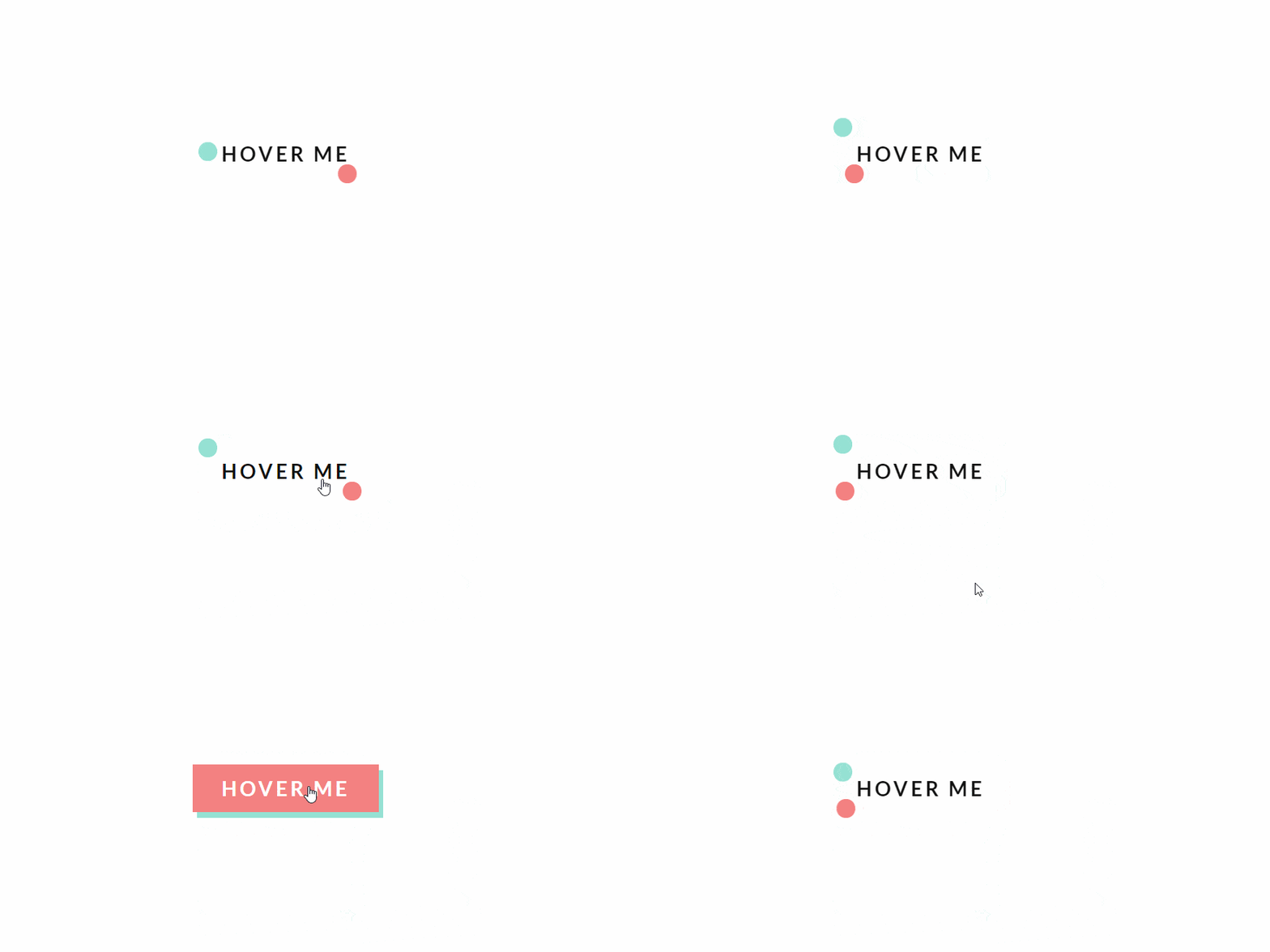
Micro-interactions — like hover effects, loading animations, button sounds, and scroll-based transitions — are subtle but meaningful ways to enhance user experience. Website design is no longer static but rich with motion and responsiveness that guide users fluidly through the content.
Adding visual cues in response to user action improves engagement and makes the journey feel interactive and lively.
3. AI-Powered Personalization
Artificial Intelligence is changing the game in website design. AI tools are being used to create personalized experiences based on user behavior, location, and interaction history. These hyper-personalized websites can deliver content recommendations, adaptive design changes, and tailored CTAs in real-time.
For example, eCommerce platforms now display product suggestions based on browsing habits, increasing the chance of conversion and improving user satisfaction.
4. Minimalist Navigation
Navigation trends are leaning towards simplification. Gone are the days of dense menus. Website design companies are implementing Hamburger menus, progressive disclosure, and sticky headers that create a cleaner, more focused layout while maintaining accessibility.
- Enhanced focus on the content
- Faster loading times
- Better adaptability for mobile designs
By limiting distractions, minimalist navigation helps users find what they need without cognitive overload.
5. Bold and Experimental Typography
Typography is more than just font choice — it’s a core design element. Many website design agencies are pushing the envelope with oversized headlines, animated text, and experimental font pairings to give websites a distinct personality.
These daring typography choices can grab user attention, increase retention, and define brand identity more strongly than imagery in some cases.
6. Sustainability-Focused Design
Environmental awareness has entered digital design in a big way. Website design companies are focused on building “sustainable websites” by optimizing for lighter code, faster load times, and less energy consumption. Eco-friendly hosting solutions and streamlined design choices are becoming part of many agencies’ practices.
Examples include using SVGs over heavier image formats and minimizing third-party scripts that affect load speed.
7. Custom Illustrations and 3D Content
In a sea of stock images, custom illustrations tell a more unique and branded story. Increasingly, companies are commissioning illustration styles that reflect their voice and mission. Some go a step further, incorporating 3D elements and immersive art to create unforgettable visual experiences.
WebGL, Spline, and Three.js tools are enabling smoother integration of 3D models without compromising website performance.

8. Full Accessibility Implementation
Accessibility is gaining traction as a foundational element instead of a final layer. Every reputable website design company now includes ADA compliance and WCAG standards in their design process from day one.
- Screen reader support
- High color contrast options
- Keyboard-friendly navigation
This shift isn’t just ethical—it’s business-savvy, opening up websites to a larger audience while avoiding legal pitfalls.
9. Voice-Activated Interfaces
With the rise of smart assistants, integrating voice interactions into websites is becoming more feasible and expected in 2024. These interfaces provide hands-free browsing, increasing accessibility and offering a futuristic touchpoint for users.
While more common in mobile apps and devices, website voice integration is becoming essential for SaaS platforms, e-commerce, and customer service portals.
10. Mobile-First and Responsive Everything
If it’s not mobile-friendly, it’s not relevant. The prioritization of mobile design isn’t new, but it’s now at the forefront of every agency’s process. Web design companies develop components specifically for the smallest screen first and scale up, ensuring seamless experiences across all devices.
This also includes attention to touch gestures, thumb navigation zones, and adaptive UI components.
11. Seamless CMS and Headless Architecture
Businesses want power, speed, and flexibility — and website development companies are meeting that demand with headless CMS solutions. These separate the content layer from the presentation layer, allowing for smoother integrations and lightning-fast delivery.
It also helps future-proof websites by allowing content to be reused across platforms — from web to wearables.
12. SEO-Centric Design
Search engine optimization and design are no longer separate spheres. Designers are actively weaving in SEO best practices into their website architecture. Structured data, core web vitals, and semantic HTML are now considered as important as aesthetic design.
Design agencies now work in tandem with marketers and SEO specialists to ensure that websites rank as well as they look.
Conclusion
As 2024 unfolds, website design companies are stepping up their game to deliver experiences that are faster, smarter, and more inclusive. The trends they’re embracing speak to a larger shift towards human-centered and sustainable technology. From the elegance of minimalism to the excitement of AI-powered automation, the future of web design is not just functional — it’s inspirational.
FAQ
- Q: Why is dark mode so popular in website design?
A: Dark mode reduces eye strain, conserves battery on OLED devices, and offers a modern, stylish aesthetic that many users prefer. - Q: What are micro-interactions in web design?
A: Micro-interactions are small animations or responses that occur after a user interacts with a webpage, like hovering over a button or completing a form field. - Q: How does AI enhance website design?
A: AI tools personalize content delivery, improve user experience, and can automate elements like chat, recommendations, and user journey analysis. - Q: What is “headless CMS” and why is it becoming popular?
A: A headless CMS decouples the backend (content management) from the frontend, allowing developers to use APIs to deliver content anywhere — improving speed and flexibility. - Q: How do design trends influence SEO?
A: Trends like minimalism and fast-loading pages improve core web vitals, which are key ranking factors for search engines.