Choosing how to build a website is a critical decision that affects cost, speed, scalability, and long-term flexibility. For years, custom-coded websites were seen as the gold standard, associated with professionalism and control. However, modern website builders have evolved into sophisticated platforms capable of powering serious businesses. In many scenarios, they are not just sufficient—they are strategically smarter.
TLDR: Website builders often make more sense than custom code for small to mid-sized businesses, startups, and non-technical teams that need speed, affordability, and manageable maintenance. They reduce development time, lower upfront investment, and include built-in hosting, security, and updates. Custom coding remains valuable for complex, highly specialized platforms. For most standard business websites, however, builders provide exceptional efficiency with minimal compromise.
Understanding when to choose a website builder over custom development requires clarity about goals, budget, technical requirements, and long-term growth plans. This article examines the scenarios where website builders are not only adequate but strategically advantageous.
1. When Speed to Market Is Critical
Time is often the most expensive resource in business. Launching quickly can validate an idea, capture demand, or secure investor interest. Custom development typically involves:
- Discovery and requirements gathering
- UX/UI design from scratch
- Front-end and back-end development
- Testing and revisions
- Deployment and optimization
This process can take months.
A website builder, by contrast, can compress that timeline into days or weeks. Pre-built templates, drag-and-drop design systems, and integrated hosting environments eliminate major bottlenecks. For businesses launching a marketing site, online store, portfolio, or landing page, the ability to go live quickly often outweighs the marginal customization benefits of custom code.
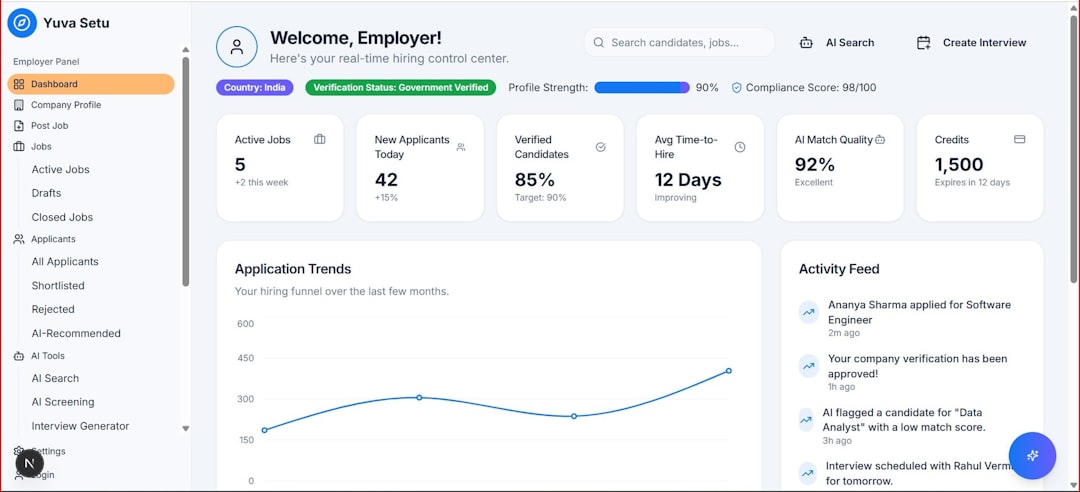
If speed directly impacts revenue generation, website builders frequently offer a clear advantage.
2. When Budgets Are Limited or Predictability Is Required
Custom-coded websites require professional developers. Depending on complexity, costs can range from several thousand to well into six figures. Ongoing maintenance, security updates, and feature expansions add further expense.
Website builders typically operate on subscription models, offering:
- Transparent monthly pricing
- Included hosting and security
- Automatic updates
- Integrated customer support
This predictability is especially important for startups, nonprofits, and small businesses managing tight budgets. Rather than allocating significant capital to development, funds can be redirected toward marketing, product development, or operations.
From a financial risk perspective, website builders reduce exposure while still delivering professional results.
3. When Technical Teams Are Absent
Not every organization has in-house developers. Managing custom code requires ongoing technical oversight—even minor changes may involve engineering time.
Website builders are designed for non-technical operators. Marketing teams can:
- Edit text and images instantly
- Create landing pages without developer tickets
- Update pricing or product details in minutes
- Install new features via plugins or apps
This autonomy accelerates workflows and reduces internal friction. Instead of waiting weeks for changes, teams can iterate rapidly, which is particularly advantageous in competitive markets.
4. When Standard Functionality Is Sufficient
Many business websites share core requirements:
- Informational pages
- Contact forms
- Blog capabilities
- E-commerce functionality
- Appointment booking
- Email integrations
Leading website builders now offer robust built-in solutions for these needs. For example:
| Platform | Best For | Ease of Use | E-commerce Support | Customization Depth | Typical Cost |
|---|---|---|---|---|---|
| Wix | Small businesses, portfolios | Very High | Strong | Moderate | Low to Moderate |
| Shopify | Online stores | High | Excellent | Moderate | Moderate |
| Squarespace | Creative professionals | High | Strong | Moderate | Moderate |
| Webflow | Design-focused businesses | Moderate | Good | High | Moderate |
| Custom Code | Complex platforms | Low (requires expertise) | Flexible | Very High | High to Very High |
If your needs align with standard web functionality, investing in custom code may represent unnecessary complexity. Website builders already solve these problems at scale.
5. When Maintenance and Security Should Be Outsourced
Security vulnerabilities, plugin conflicts, server downtime, and software patches are inherent risks in custom-coded environments. They demand vigilance and technical expertise.
Website builders manage these responsibilities centrally. Updates occur automatically. Hosting infrastructure is monitored continuously. Security protocols are maintained by dedicated engineering teams.

For organizations that prefer focusing on business growth instead of infrastructure management, this centralized responsibility is a significant benefit.
6. When Iteration and Testing Matter More Than Perfection
Modern business strategy emphasizes experimentation. Landing pages are tested. Messaging evolves. Products pivot.
A custom-coded website may provide deep flexibility, but implementing changes can require formal development cycles. Website builders, by contrast, support rapid experimentation:
- Duplicate and edit pages instantly
- Integrate analytics tools without development
- Deploy A/B tests quickly
- Adjust design without rewriting code
For marketing-driven organizations, this agility often produces better outcomes than a perfectly engineered but rigid custom solution.
7. When Scalability Is Moderate, Not Extreme
A common argument in favor of custom development is scalability. While valid in certain contexts, this concern is frequently overstated.
Most small and mid-sized companies will not reach traffic levels that strain high-tier builder plans. Platforms like Shopify and Webflow support significant commerce and content operations without custom infrastructure.
Custom code becomes necessary when:
- You require highly specialized backend processes
- You are building SaaS products or web applications
- You need unique system integrations at scale
- You expect enterprise-level traffic from inception
If these conditions do not apply, website builders typically scale sufficiently for years.
8. When Design Quality Is Achievable Without Full Customization
Early website builders suffered from limited design flexibility. That is no longer universally true.
Contemporary platforms offer:
- Custom CSS capabilities
- Extensive template libraries
- Responsive design optimization
- Brand-aligned typography and layout control

While custom code allows unrestricted creativity, most business websites do not demand avant-garde design structures. A professional template customized thoughtfully can achieve both credibility and aesthetic distinction.
9. When Total Cost of Ownership Matters
The true cost of a website is not just the initial build. Consider:
- Developer retainers
- Security monitoring
- Bug fixes
- Server management
- Performance optimization
- Redesign cycles
Website builders bundle much of this into predictable subscription pricing. Over five years, the difference in total cost of ownership can be substantial.
For organizations seeking operational efficiency and financial clarity, this long-term perspective is decisive.
10. Where Custom Code Still Wins
To provide balanced guidance, it is essential to acknowledge where custom development is clearly justified:
- Complex software platforms with proprietary logic
- Advanced data processing systems
- Highly regulated environments requiring specific compliance configurations
- Unique integrations not supported by existing ecosystems
- Extreme performance optimization needs
In these cases, builders may introduce limitations that hinder growth or innovation. Custom code offers total control—but at corresponding cost and responsibility.
Making the Strategic Decision
The choice between a website builder and custom code should not be framed as a matter of prestige. It is a strategic assessment of trade-offs.
Ask the following questions:
- Is our core business dependent on unique web functionality?
- Do we have ongoing technical support resources?
- Is rapid iteration more important than perfect customization?
- Does our projected growth justify complex infrastructure?
- Would funds be better invested outside of development?
If the honest answers lean toward simplicity, budget consciousness, and operational efficiency, a website builder may be the more responsible business decision.
Conclusion
Website builders have matured into powerful platforms capable of supporting serious commercial activity. They offer speed, financial predictability, ease of maintenance, and sufficient flexibility for most standard business needs. Custom-coded websites remain indispensable for complex digital products and deeply specialized applications.
However, for the majority of small to mid-sized organizations, choosing a website builder is not a compromise—it is a disciplined allocation of resources. In an environment where agility and cost control define competitiveness, pragmatism often outweighs perfection.
Making the right choice depends less on technical aspiration and more on strategic clarity.