


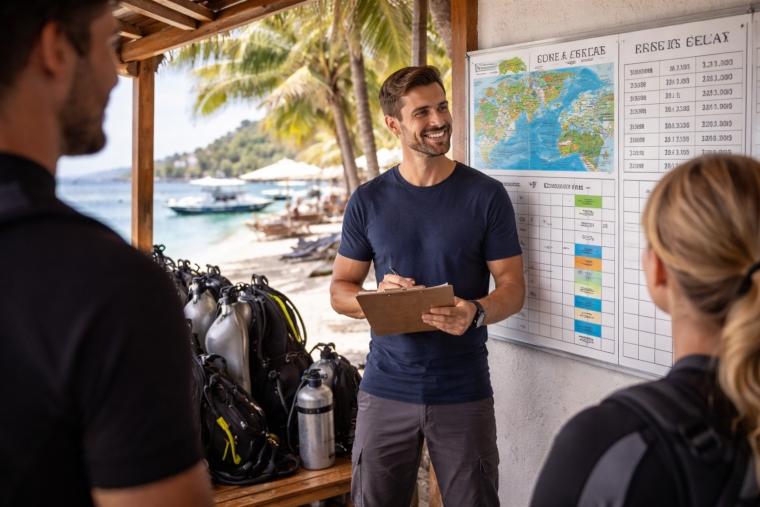
If you spend enough time running boats and welcoming guests in Bali, you learn that the “magic” people talk about is usually the result of quiet systems working well. When guests mention Neptune diving Bali in conversation, they’re often using it as shorthand for a specific type of experience: organised pick-ups, clear briefings, predictable timing, and a feeling that someone competent is steering the day. That matters for dive centre owners and for software developers who love the underwater world, because Bali is one of the most valuable places on earth for studying how hospitality and operations translate into trust.
I’ve managed a diving centre in Bali and worked in Indonesian hospitality for more than 15 years. I’ve seen the island through crowded high seasons, quiet shoulder months, and the reality of running mixed groups where one guest is newly certified and another has 500 dives. Bali is a fantastic destination, but it’s also an unforgiving one for operational weakness: traffic delays, shifting sea conditions, and high guest expectations mean you either run a tight ship or you spend your day apologising.
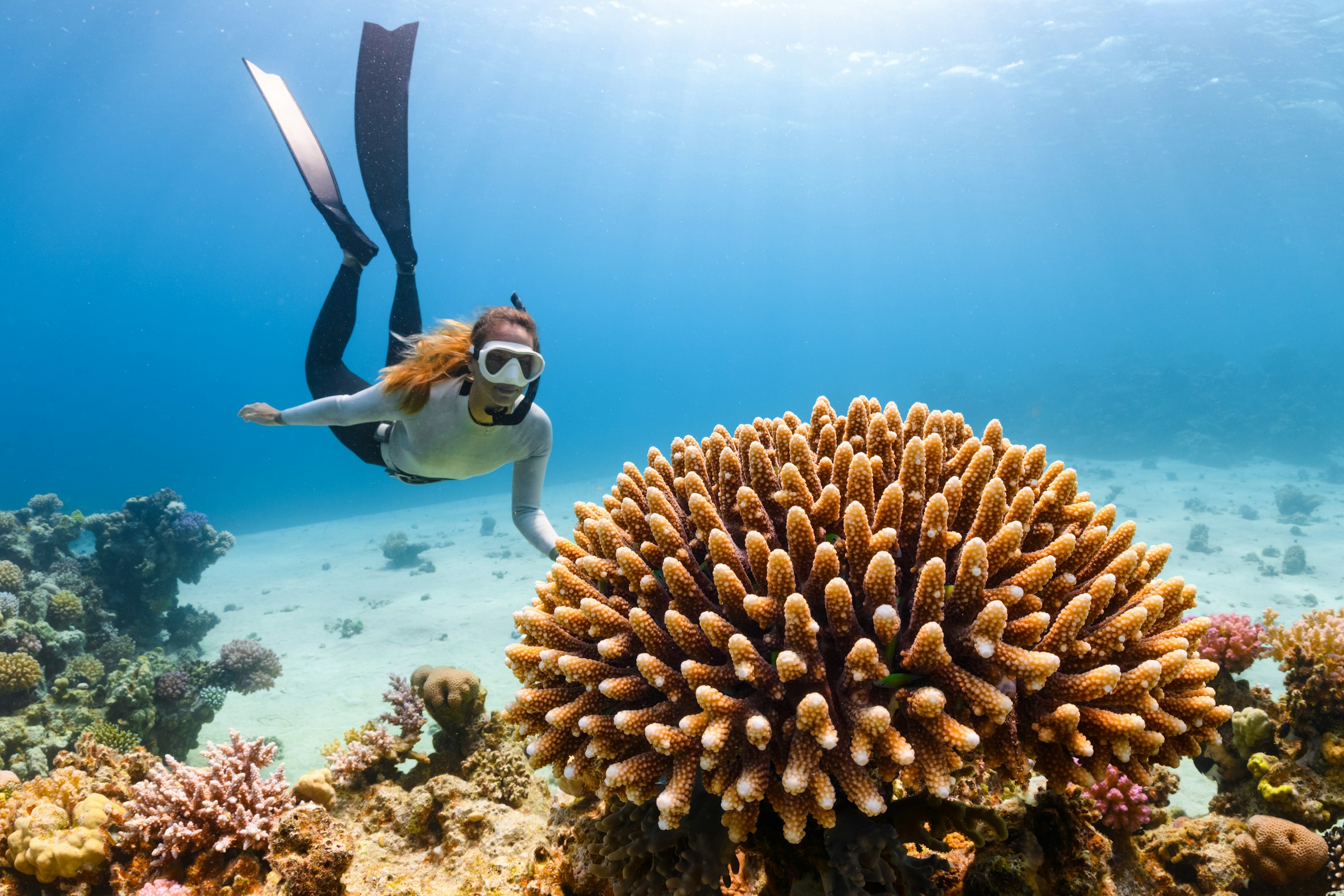

Bali isn’t one dive destination – it’s a network of micro-markets
The phrase “scuba diving in Bali, Indonesia” encompasses multiple coastlines, varying sea states, and very different guest journeys. A guest staying in the south may need a dawn pick-up and a long road transfer to reach a calm morning site. Another guest in the north can roll out of bed and be on a boat quickly, but might face different current patterns and water temperatures.
For operators, this means your actual product is not only the dive; it is the end-to-end day:
- The pick-up experience and punctuality
- The briefing quality and tone
- Equipment fit and reliability
- The site choice is based on conditions and guests’ abilities.
- The post-dive flow, hydration, food, and return logistics
If any link is weak, the guest doesn’t remember the reef; they remember the friction.
What “best diving in Bali” really means to guests
Guests use the phrase “best diving in Bali” as a simple way to describe it, but it masks different intents. Most divers fall into one of these groups:
- First-time Bali divers who want an easy, reassuring day with good visibility and explicit instruction.
- Experienced divers who want variety, challenge, or a signature encounter without chaos on the surface.
- Underwater photographers who care about timing, space, and calm logistics as much as marine life.
- Mixed groups where one person dives and another wants snorkelling or a lighter day.
A great operator is not the one who insists that every guest use the same “top sites”. It’s the one that aligns the day with the diver and makes decision-making feel transparent and professional.
The real differentiator: briefings that reduce uncertainty
Bali diving can be spectacular, but it can also involve currents, temperature changes, and surface conditions that don’t show up in a marketing photo. The best operators treat briefings as a service, not a formality.
A briefing that works is:
- Short and structured
- Specific about entries and exits
- Honest about what can change mid-dive
- Clear about group positioning and separation rules
- Calm in tone, not dramatic
For dive centre owners, this is leadership. For software-minded readers, it’s a workflow: briefings are repeatable, but they must allow for site-specific detail.
Site choice as operations, not ego
When people search for the best scuba diving spots in Bali, they often assume the “best” sites are fixed. In practice, the “best” site today depends on conditions and the group. Strong operators will change the plan without making guests feel like they’ve lost value.
This is one of the most complex skills for newer managers: choosing a safer or calmer site is not a downgrade if it delivers a better dive experience. The goal isn’t to tick boxes; it’s to create a day guests would happily repeat.
Professionally, this comes down to:
- Reading sea state and visibility windows
- Using tide timing intelligently
- Knowing which sites work well for which experience levels
- Avoiding crowding when it damages the experience
- Planning conservative alternatives in advance
Guests rarely complain about a site change when the rationale is clearly communicated.
Hospitality on a dive boat: small details, significant impact
Boat-based hospitality is a craft. Divers are sensitive to comfort: heat, dehydration, seasickness, and fatigue affect enjoyment and safety. In Bali, the best operations treat these as part of the service design:
- Shade and water are always available and actively offered
- Snacks and timing are planned around dives, not afterthoughts.
- Staff watch for early signs of seasickness or heat stress.
- Equipment handling is organised to keep the deck calm.
- Counts and procedures are consistent, not improvisational.
This is where Bali sets a useful benchmark: the island attracts high volumes, and high volume forces systems. You can’t run on personality alone.


What dive centre owners can borrow from software thinking
Software developers understand something operators often forget: the user experience is the product. In diving, the “user” is a guest who is sometimes nervous, sometimes excited, and often out of their comfort zone.
If we apply sound UX principles to dive operations, we get practical improvements:
Reduce steps at peak stress moments
Don’t ask guests to fill out complex forms on a dock or sign multiple documents while a boat is waiting. Collect essentials earlier. Make on-site steps minimal and guided.
Make status visible
Guests feel calmer when they know what happens next. A simple, repeated rhythm—kit check, briefing, entry, exit, debrief creates confidence.
Handle exceptions gracefully
People forget certifications, feel anxious, get seasick, or have equipment issues. A mature operation has pre-planned responses so staff don’t scramble.
Design communications as part of safety
Pre-arrival messages about timing, what to bring, and what conditions may feel like can reduce problems. The goal isn’t to sound strict; it’s to make guests feel prepared.
Where SaaS and tooling can help without becoming intrusive
Bali operations have a lot of moving parts: transfers, boats, staff rosters, equipment, mixed groups, and weather-driven changes. Tools can help, but only if they reduce friction for staff.
High-value tooling areas include:
- A single day plan visible to all staff (pick-ups, sites, guest notes)
- Guest profiles that capture experience level and comfort in the current
- Equipment sizing notes to avoid morning chaos.
- Automated pre-trip messaging that’s friendly and clear
- Simple incident logging and feedback capture
The test is simple: does the tool make a busy day calmer, or does it add another system to manage?
Why Bali remains a proving ground for quality
The reason Bali stays relevant is not only its underwater life; it’s that the island creates a demanding operating environment. Traffic can disrupt timelines, weather can change quickly, and guests often compare you to the best operators they’ve used anywhere in the world. That pressure is uncomfortable, but it forces excellence.
For operators, Bali teaches that reputation is built on repeatable competence: on-time pick-ups, clean equipment processes, clear briefings, and conservative decision-making when conditions demand it.
For software developers who love diving, Bali is a reminder that “experience design” isn’t a buzzword. It’s the difference between a guest who says “the reefs were nice” and a guest who says “I felt looked after all day.”
Closing thought: the best Bali diving is a system, not a slogan
The best scuba diving spots in Bali are not only defined by coral and fish. They’re defined by how well an operation matches the site to the group, how calmly it manages the day, and how consistently it communicates. That’s what turns a destination into a repeat-visit market.
So when guests talk about Neptune diving in Bali as a reference point, it’s worth hearing what they’re really saying: they want an experience that feels guided by competence, not luck. For dive centre owners, that’s a blueprint for building systems that protect the guest journey. For software and SaaS readers, it’s an invitation to design tools that support reality on the ground (and on the water), so hospitality can stay human even at scale.