



Amazon Web Services dominates the cloud infrastructure market, but it is far from the only viable option. For many startups, developers, and growing businesses, AWS can feel overly complex, expensive, or simply more than what is needed. Fortunately, a range of underrated VPS and cloud providers offer competitive performance, transparent pricing, and developer-friendly environments without sacrificing reliability.
TLDR: AWS is powerful but not always the best fit for every workload or budget. Several lesser-known VPS and cloud providers deliver strong performance, predictable pricing, and simpler management experiences. Providers like Hetzner, Vultr, UpCloud, and others offer serious alternatives for startups, SMBs, and developers. Choosing the right one depends on your workload, scaling needs, and cost sensitivity.
Below are eight underrated VPS and cloud providers that deserve serious consideration as AWS alternatives.
1. Hetzner Cloud
Based in Germany, Hetzner Cloud has quietly built a reputation for exceptional performance at remarkably low prices. It offers both VPS-style cloud instances and dedicated servers, making it suitable for everything from small applications to enterprise-grade deployments.


Key strengths:
- Extremely competitive pricing
- High-performance AMD and Intel CPUs
- Strong European data protection standards
- Simple and clean management interface
Hetzner’s transparent pricing structure eliminates the complexity often associated with AWS billing. While its global footprint is smaller, recent expansions into the United States and Asia have improved its international appeal. For cost-conscious organizations seeking performance without unnecessary add-ons, Hetzner is a compelling choice.
2. Vultr
Vultr combines ease of use with global reach. With data centers in over 30 locations worldwide, it offers low latency coverage comparable to larger hyperscalers.
What makes Vultr stand out?
- Straightforward hourly and monthly billing
- Optimized cloud compute instances
- Kubernetes and managed database options
- Global deployment in minutes
Developers particularly appreciate Vultr’s fast provisioning times and predictable pricing. While it does not offer the vast ecosystem of AWS services, it delivers precisely what many businesses need: scalable compute, storage, and networking without complexity.
3. UpCloud
UpCloud markets itself around performance, and its claims are supported by consistently strong benchmarks. The company’s proprietary MaxIOPS storage technology is engineered to outperform standard SSD-based VPS offerings.
Advantages include:
- High IOPS block storage
- Transparent, flat pricing
- Strong European presence
- Reliable SLA commitments
UpCloud is especially well-suited for performance-sensitive applications such as eCommerce platforms, SaaS applications, and transactional databases. Organizations that require consistent disk performance without investing in AWS’s premium storage tiers may find UpCloud an efficient alternative.
4. Scaleway
Founded in France, Scaleway offers a broad range of infrastructure services, bridging the gap between lightweight VPS providers and large-scale cloud platforms.

Scaleway provides:
- ARM and x86 cloud instances
- Managed Kubernetes
- Object and block storage
- Serverless functions
Its ARM-based instances are particularly attractive for cost-efficient, modern workloads. Businesses looking for a European-focused AWS alternative with a growing service portfolio will find Scaleway both innovative and competitively priced.
5. Linode (Akamai Cloud Computing)
Now integrated into Akamai, Linode remains one of the most developer-friendly infrastructure providers. It earned its reputation by offering straightforward VPS hosting long before “cloud-native” became a buzzword.
Why consider Linode?
- Clean, intuitive control panel
- Strong documentation and community support
- Predictable pricing model
- Integrated CDN advantages via Akamai
While AWS offers a broader feature set, Linode’s simplicity is often a strength. Teams that prioritize fast deployment, easy scaling, and tight cost control may find Linode to be a better operational fit.
6. OVHcloud
OVHcloud is one of Europe’s largest cloud infrastructure providers but remains underrated in North America. Its portfolio ranges from VPS servers to fully managed private cloud solutions.
Notable capabilities:
- Anti-DDoS protection included by default
- Wide selection of dedicated server configurations
- Competitive bandwidth allowances
- Strong compliance standards
OVHcloud is particularly attractive for workloads requiring high bandwidth at predictable costs. Unlike AWS, where network egress fees can escalate quickly, OVHcloud offers generous traffic allocations that simplify budgeting.
7. Kamatera
Kamatera combines cloud flexibility with highly customizable virtual machine configurations. It allows users to tailor CPU, RAM, and storage independently rather than forcing predefined bundles.
This granular flexibility enables:
- Precise resource allocation
- Avoidance of overprovisioning
- Scalable infrastructure in multiple regions
Kamatera’s infrastructure is particularly well-suited for businesses migrating from traditional hosting environments. Its technical support options and managed services provide an added layer of reassurance for organizations without large DevOps teams.
8. Exoscale
Headquartered in Switzerland, Exoscale focuses on privacy-conscious and compliance-driven organizations. It delivers a compact yet mature cloud ecosystem.

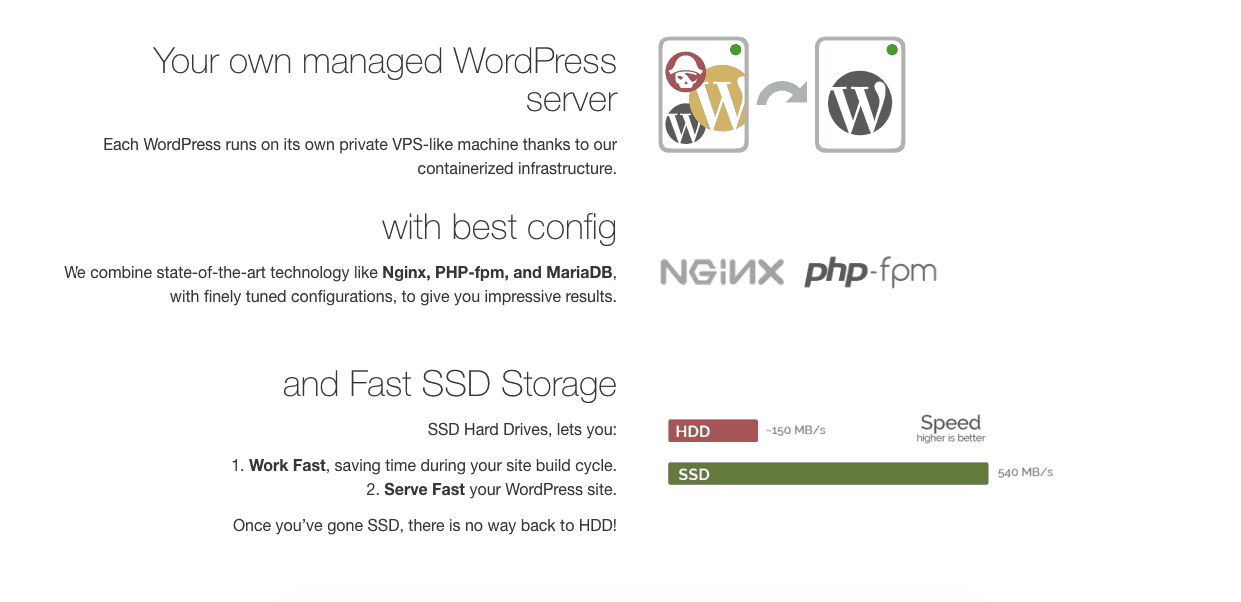
Highlights include:
- Strong data protection regulations
- Simple, usage-based pricing
- Managed Kubernetes and object storage
- Robust API and automation capabilities
Exoscale may not match AWS in raw service breadth, but it prioritizes reliability, performance, and compliance. For financial institutions, healthcare platforms, and security-focused SaaS companies, it represents a credible and stable alternative.
Why Consider AWS Alternatives?
Choosing an alternative provider is not necessarily about rejecting AWS. Instead, it often reflects specific operational priorities:
- Cost predictability: Many smaller providers offer clearer pricing with fewer hidden fees.
- Simplified management: Reduced service sprawl means faster onboarding and maintenance.
- Focused performance: Specialized infrastructure can outperform generalized cloud offerings in certain scenarios.
- Data sovereignty: Regional providers may align better with regulatory requirements.
AWS excels in its vast ecosystem, but that same breadth can introduce complexity and billing uncertainty. For small to mid-sized organizations, a streamlined VPS or cloud provider often proves more efficient.
Key Factors When Choosing a Provider
When evaluating alternatives, decision-makers should consider the following:
- Geographic coverage: Proximity to users impacts performance.
- Network policies: Bandwidth limits and egress costs can significantly affect total cost of ownership.
- Support quality: Responsive technical assistance can reduce downtime.
- Scalability: Ensure the platform can grow with your organization.
- Compliance standards: Certain industries require specific certifications.
No single provider is universally superior. The optimal choice depends on workload characteristics, internal expertise, long-term growth plans, and financial constraints.
Final Thoughts
The cloud market is more diverse than the dominance of AWS might suggest. Providers like Hetzner, Vultr, UpCloud, Scaleway, Linode, OVHcloud, Kamatera, and Exoscale demonstrate that performance, reliability, and scalability are not exclusive to hyperscale providers.
For organizations willing to evaluate alternatives thoughtfully, these platforms can deliver equal—if not superior—value in specific contexts. Whether your priority is cost efficiency, transparency, privacy, or performance, the right underrated VPS or cloud provider may offer precisely the balance your business needs.
In an increasingly multi-cloud world, exploring serious alternatives is not just prudent—it is strategic.