



Growth is the lifeblood of every SaaS company. In an environment defined by subscription fatigue, increasing acquisition costs, and aggressive competition, sustainable user acquisition requires far more than paid ads and surface-level tactics. True growth hacking blends product optimization, data science, psychology, and disciplined experimentation. The following strategies are not shortcuts—they are structured, scalable approaches designed to drive measurable, compounding results.
TLDR: SaaS growth is driven by structured experimentation, product-led acquisition, and data-backed optimization. Companies that combine referral mechanics, SEO authority, onboarding refinement, partnerships, and behavioral analytics often achieve up to 3x user growth. Sustainable expansion comes from aligning product value with distribution strategy. Focus on measurable impact, rapid experimentation, and retention-first thinking.
Below are 11 proven SaaS growth hacking strategies that consistently drive exponential user acquisition when executed correctly.
1. Build a Product-Led Growth Engine
Product-Led Growth (PLG) shifts acquisition from sales-heavy to experience-driven. Instead of persuading users through demos and calls, your product becomes the primary driver of conversion.
- Offer a free trial or freemium model
- Remove friction during sign-up
- Ensure users experience core value within minutes
- Add contextual in-app prompts that guide activation
The goal is simple: let users reach an “aha moment” quickly. Companies that optimize onboarding to reduce time-to-value typically see dramatic improvements in conversion rates and organic referrals.


2. Engineer a High-Impact Referral System
Referral programs remain one of the most powerful acquisition channels because they leverage trust. A satisfied customer is often more persuasive than any advertisement.
Effective referral systems:
- Provide clear, immediate rewards
- Incentivize both sender and receiver
- Make sharing effortless across platforms
- Integrate seamlessly into user workflows
Dropbox’s growth is a well-known example, but the lesson remains relevant: align incentives with behavior that expands your network. Even modest referral participation can double user growth over time.
3. Optimize for Search Intent, Not Just Keywords
Organic acquisition through SEO is often the most cost-efficient long-term channel. However, ranking alone is insufficient. The real leverage comes from targeting high-conversion search intent.
Focus on:
- Comparison keywords (e.g., “X vs Y software”)
- Solution-based queries (“best tool for…”)
- Problem awareness content
- Integration-related searches
Create authoritative, in-depth content that solves real decision-stage problems. Complement it with optimized landing pages and strong internal linking. Over time, this builds domain authority and consistent inbound acquisition.
4. Use Data-Driven CRO to Multiply Traffic Value
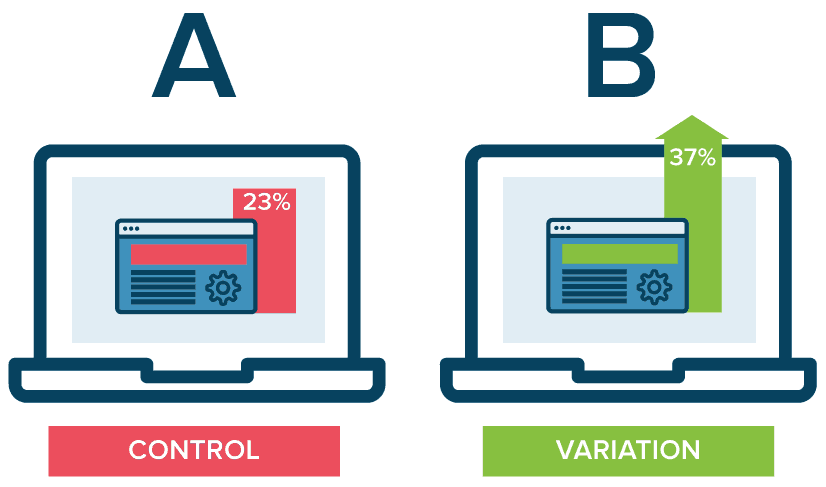
Before increasing traffic, increase conversion. Conversion Rate Optimization (CRO) often unlocks hidden growth without additional acquisition spend.
Systematic CRO includes:
- A/B testing headlines and CTAs
- Optimizing pricing page psychology
- Simplifying forms
- Reducing cognitive overload
- Testing social proof placement
Even small improvements—raising conversion from 3% to 5%—can represent a 66% performance increase. Over time, incremental gains compound significantly.

5. Turn Integrations into Distribution Channels
Strategic integrations do more than improve product utility—they open new pools of users. When your SaaS integrates with widely adopted platforms, you gain visibility in their ecosystems.
Consider:
- App marketplace listings
- Co-marketing campaigns
- Joint webinars
- Shared case studies
An integration with a major CRM, payment platform, or collaboration tool can expose your product to thousands of qualified prospects already in buying mode.
6. Create an Authority Flywheel Through Thought Leadership
B2B SaaS in particular benefits from authority building. Founders and executives who publish data-driven insights, whitepapers, and industry commentary often accelerate inbound interest.
This includes:
- Publishing research reports
- Sharing transparent growth metrics
- Speaking at industry events
- Maintaining consistent LinkedIn presence
Authority builds trust. Trust reduces friction. Reduced friction improves acquisition.
7. Leverage Behavioral Email Automation
Email remains one of the highest ROI acquisition and activation tools—when behavior-triggered.
Effective SaaS email flows include:
- Welcome and onboarding sequences
- Activation reminders
- Feature discovery prompts
- Re-engagement workflows
- Upgrade nudges tied to usage thresholds
Segment users based on actions, not demographics. Behavioral personalization increases open rates, retention, and paid conversion.
8. Introduce Strategic Pricing Experiments
Pricing influences acquisition more than many teams realize. It communicates positioning, trust, and perceived value.
Growth-focused pricing experiments may include:
- Removing unnecessary tiers
- Introducing usage-based pricing
- Adding feature-gated entry plans
- Bundling services strategically
Careful A/B testing of pricing structure—not just price points—can significantly increase both trial sign-ups and paid conversions.
9. Build Community-Led Expansion
Communities convert users into advocates. Whether through Slack groups, forums, or user communities, shared engagement creates loyalty and accelerates word-of-mouth growth.
Strong SaaS communities:
- Offer exclusive insights
- Encourage knowledge sharing
- Provide direct access to product teams
- Highlight user success stories
Over time, community becomes a growth moat: a retention driver that simultaneously attracts new users.

10. Use Account-Based Marketing for High-Value Segments
For SaaS companies targeting mid-market or enterprise customers, Account-Based Marketing (ABM) enables precise, high-impact acquisition.
Instead of broad targeting, ABM focuses on:
- Identifying high-value accounts
- Personalizing outreach campaigns
- Aligning sales and marketing efforts
- Creating customized landing pages
This strategy improves close rates and shortens sales cycles when executed with data discipline. While not traditionally labeled as growth hacking, ABM can significantly amplify acquisition efficiency in defined segments.
11. Measure What Truly Drives Expansion
Growth hacking fails without disciplined measurement. Vanity metrics—traffic, impressions, social likes—can distort focus. High-performing SaaS teams prioritize meaningful signals such as:
- Customer Acquisition Cost (CAC)
- Lifetime Value (LTV)
- Activation rate
- Churn rate
- Net Revenue Retention
A culture of experimentation must be supported by clean data pipelines and fast iteration cycles. Every growth initiative should have a hypothesis, measurable KPI, and defined evaluation period.
Sustainable Growth Is Systematic
The most successful SaaS companies do not rely on one breakthrough tactic. They build integrated growth systems where product, marketing, analytics, and customer success reinforce one another.
To drive 3x user acquisition:
- Prioritize user experience before increasing traffic
- Build shareability into the product
- Create authority-driven inbound channels
- Continuously test pricing and messaging
- Track metrics that tie directly to revenue
Growth hacking, when practiced responsibly, is not about exploiting loopholes. It is about identifying high-leverage opportunities, validating them with data, and scaling what works. Companies that adopt this disciplined mindset consistently outperform competitors still relying on disconnected tactics.
In a maturing SaaS landscape, advantage belongs to organizations that treat growth as an engineering function—measurable, repeatable, and strategically aligned. Apply these eleven strategies with rigor, track their impact, and refine continuously. When executed systematically, 3x user acquisition is not an aspiration—it becomes a predictable outcome.